Training for the endomorph
Easy to gain weight and hard to lose it - a familiar situation for people with an endomorphic build. But such a body type also has advantages: a massive frame and the ability to build strength faster. The editorial team explains how to structure training and nutrition for the endomorph based on research, in order to reduce the share of fat and at the same time preserve and build muscle.
The endomorph: a description of body build without myths
In the classification of somatotypes proposed by William Sheldon and later formalized by Carter and Heath (1990), an endomorph is a person with rounded forms, a wider bone base and a tendency to accumulate fat tissue. In the fitness environment the term is used to describe those who easily gain weight and find it harder to lose it.
As in the case of ectomorphs, it is worth avoiding extremes. A somatotype is not a diagnosis and not an explanation for all difficulties. Body build is partly determined by genetics but depends significantly on lifestyle: eating habits, level of activity, sleep. A person who has moved little for several years may look like an 'endomorph,' although their natural build is different.
At the same time, 'endomorphs' have real advantages. They usually have a more massive frame and easily gain not only fat but also muscle mass. In strength sports, especially in heavy weight categories, such a build is often an advantage.
So the goal of training for the endomorph is not to 'fight genetics' but to use its strengths: to build muscle, develop strength, and at the same time manage energy balance in order to control the share of fat.
Strength training as the foundation
A common mistake is to believe that only cardio is needed for weight loss. For the endomorph, strength training is the foundation of the program. It preserves and builds muscle mass, improves insulin sensitivity, maintains joint mobility and promotes better body composition. The review by Westcott (2012) summarizes a wide range of health benefits of strength training, from metabolism to bone tissue.
The study by Willis et al. (2012) compared aerobic, strength and combined training in overweight people. Aerobic training reduced body mass and fat mass better than strength training alone, but only strength and combined training increased muscle mass. The best overall result was produced by the combination.
In practice this means 3-4 strength workouts a week with basic exercises: squats or leg press, rows, presses, pull-ups or lat pulldown. The repetition range can vary - from 6 to 15, the main thing is sufficient intensity of effort and progression.
For people with significant excess weight it is important to select exercises that do not overload the joints: at the start it is better to use machines, the leg press, goblet squats, supported rows. Jumps and running on a hard surface should be introduced gradually.
| Component | Guideline | Goal |
|---|---|---|
| Strength training | 3-4 times a week, basic exercises | Preservation and growth of muscle |
| Aerobic activity | 150-250+ min per week of moderate intensity | Energy expenditure, heart health |
| Interval training | 1-2 times a week with good conditioning | Time efficiency |
| Daily activity | Walking, steps, active breaks | Increasing NEAT |
The role of cardio and daily activity
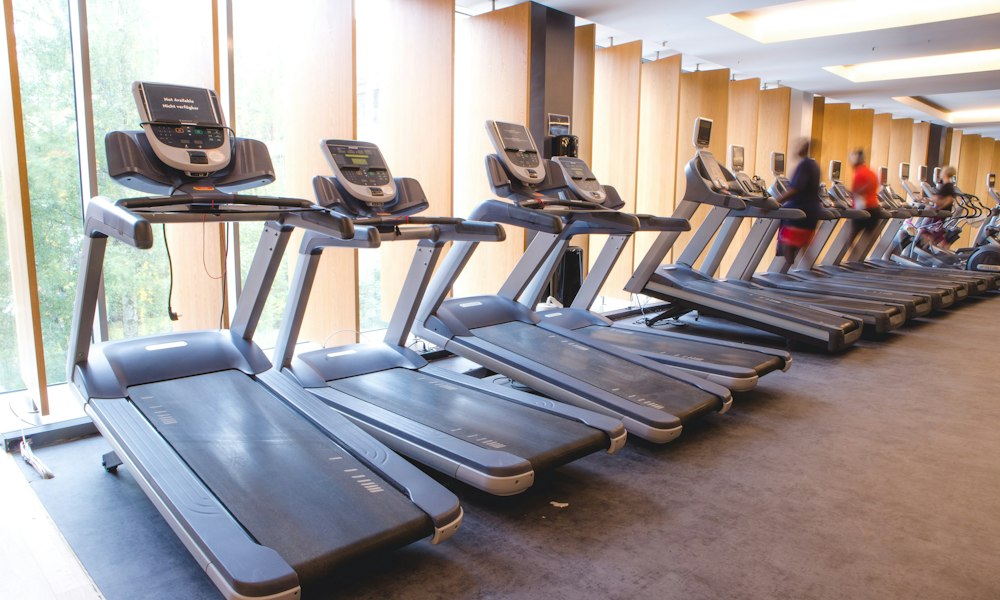
Aerobic activity is an important tool for increasing energy expenditure. The ACSM position (Donnelly et al., 2009) indicates that 150-250 minutes of moderate activity per week produce a moderate reduction in weight, and for a more substantial effect and prevention of weight regain more than 250 minutes per week may be needed.
High-intensity interval training (HIIT) is attractive for its time savings. The meta-analysis by Wewege et al. (2017) showed that HIIT and moderate continuous cardio produce similar reductions in fat mass in overweight people, although HIIT requires less time. For beginners with a lot of weight, however, it is worth starting with a moderate load.
An underestimated factor is daily unstructured activity - walking, taking the stairs, standing breaks. It is precisely this that often explains the difference between people who control their weight easily and with difficulty. The habit of daily steps often gives more than an additional workout per week.
Cardio should not be placed immediately before heavy strength work for the legs: fatigue will reduce the quality of the sets. It is better to spread them across different days or to do cardio after the strength workout.
Nutrition and control of energy balance
No workout compensates for a steady surplus of calories. For the endomorph seeking to reduce the share of fat, the basis is a moderate energy deficit. Too sharp a deficit worsens training, increases muscle loss and is rarely maintained for long.
Protein during a deficit is especially important. The study by Longland et al. (2016) showed that under conditions of a pronounced calorie deficit and intense training, the group with higher protein intake (about 2.4 g/kg) gained more muscle mass and lost more fat than the group with lower intake. The review by Helms et al. (2014) for athletes in a deficit also recommends increased protein intake.
- a moderate calorie deficit instead of strict diets;
- protein in every main meal;
- vegetables and whole grains for satiety;
- limiting liquid calories (sweet drinks, alcohol);
- regular monitoring of weight and circumferences.
The ratio of carbohydrates and fats is less important than total calories and protein. Some people feel better on a moderately low-carbohydrate diet, others on a balanced one. The main thing is that the diet be sustainable and match preferences.
As for 'fat burners': over-the-counter supplements generally have a modest effect, and prescription weight-loss agents can be used only as directed by a doctor. The use in sport of dangerous substances such as clenbuterol or DNP is associated with the risk of severe complications, up to death.
Recovery, motivation and long-term strategy
Sleep and stress matter no less for the endomorph than training. Lack of sleep increases appetite and cravings for calorie-dense food and worsens recovery. A stable sleep schedule is one of the simplest and most effective changes.
For endomorphs it is useful to alternate phases: periods of deficit for fat reduction with periods of maintenance calories, when the focus is on strength and muscle. This approach reduces diet fatigue and helps to consolidate the result.
Progress should be assessed not only by weight. An increase in strength, a decrease in waist circumference, improved well-being, blood pressure and test results are often more important than the number on the scale, especially when muscle is growing at the same time.
Finally, one needs to think long-term. Rapid weight loss often ends in weight regain, whereas gradual changes in habits give a lasting result. We also recommend reading our articles on training for the ectomorph, on training frequency per week and on warming up before strength training.
Editorial conclusions
An endomorphic build means a tendency to gain fat but also the ability to build muscle and strength more easily. The goal of training is to use these advantages while controlling energy balance.
The basis of the program is strength training 3-4 times a week, supplemented by aerobic activity and daily movement. The combination of strength and aerobic loads gives the best effect on body composition.
Nutrition with a moderate calorie deficit and sufficient protein, full sleep and a long-term strategy are more important than any 'fat burners,' and dangerous weight-loss drugs can pose a threat to life.
References
- Willis LH, Slentz CA, Bateman LA, et al. Effects of aerobic and/or resistance training on body mass and fat mass in overweight or obese adults. J Appl Physiol. 2012;113(12):1831–1837.
- Donnelly JE, Blair SN, Jakicic JM, et al. American College of Sports Medicine position stand. Appropriate physical activity intervention strategies for weight loss and prevention of weight regain for adults. Med Sci Sports Exerc. 2009;41(2):459–471.
- Wewege M, van den Berg R, Ward RE, Keech A. The effects of high-intensity interval training vs. moderate-intensity continuous training on body composition in overweight and obese adults: a systematic review and meta-analysis. Obes Rev. 2017;18(6):635–646.
- Westcott WL. Resistance training is medicine: effects of strength training on health. Curr Sports Med Rep. 2012;11(4):209–216.
- Longland TM, Oikawa SY, Mitchell CJ, Devries MC, Phillips SM. Higher compared with lower dietary protein during an energy deficit combined with intense exercise promotes greater lean mass gain and fat mass loss: a randomized trial. Am J Clin Nutr. 2016;103(3):738–746.
- Helms ER, Aragon AA, Fitschen PJ. Evidence-based recommendations for natural bodybuilding contest preparation: nutrition and supplementation. J Int Soc Sports Nutr. 2014;11:20.
- Carter JEL, Heath BH. Somatotyping: Development and Applications. Cambridge University Press; 1990.
Andriy Melnyk
A strength-sports coach and author of programs for beginner and intermediate levels. Writes about training planning.